
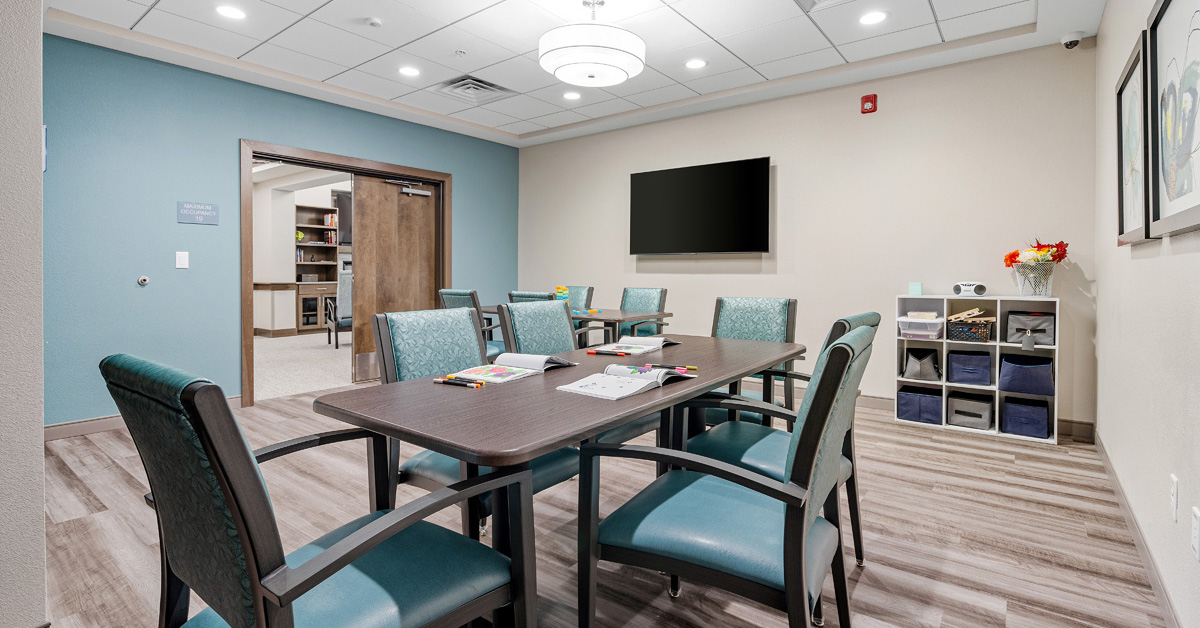
Ongoing dementia care training helps Meadowview of Johnston strengthen its memory care programming. By equipping staff with practical strategies and deeper understanding, the community creates more meaningful, person-centered activities for residents living with Alzheimer’s and other forms of dementia.
Meadowview of Johnston memory care features dedicated staff committed to ongoing professional development to better serve residents. Sydney, the activities director, participated in a multi-session training designed to improve quality of life for residents with Alzheimer’s and other forms of dementia through intentional programming.
Dementia Care Training That Strengthens Memory Care Programming
Sydney participated in three virtual classes buoyed by a full-day in-person session with memory care staff throughout Cassia, the non-profit, faith-based senior living provider that manages Meadowview of Johnston.
This type of dementia care training is especially important in memory care programming, where a deeper understanding of Alzheimer’s and cognitive decline can improve communication, reduce behavioral expressions and create more meaningful daily experiences for residents.
The 10 Absolutes of Dementia Care served as the foundation of the training. These principles guide caregivers in providing consistent, compassionate Alzheimer’s care.
Trainers also emphasized how to recognize triggers that lead to behavioral expressions. One concept that stood out to Sydney was to “honor the person’s choice, not their refusal.”
A Shift in Perspective: Meeting Residents Where They Are
No two individuals with dementia experience the same journey. Different stages of Alzheimer’s affect memory, communication and daily abilities in unique ways.
“Reviewing the types of Alzheimer’s and their characteristics help me be able to identify not only for myself but other staff and family members where someone is at in their journey and what abilities they have currently and honoring and adapting to what they can do at the current stage,” Sydney says.
This approach allows Meadowview of Johnston to tailor memory care programming to each resident’s current abilities, supporting independence while providing appropriate guidance.
Person-Centered Activities Create Purpose and Meaning
At Meadowview of Johnston, memory care programming focuses on more than keeping residents busy.
“I believe that I work in their home and I want their engagement in activities to give them fulfillment and purpose, not just being a filler of time to make their day go by,” Sydney says. “Programming isn’t about keeping them busy, but being able to continue on their life and keep writing their story.”
Choice plays an essential role in person-centered care.
“Those of us living without Alzheimer’s make many choices throughout our day of what we will or won’t do,” Sydney says. “I believe the same should be available to those who are living with Alzheimer’s, as they still retain emotional memory and a need for belonging.”
Residents can choose whether to participate in daily activities, helping preserve autonomy and dignity.
Activities Help Foster Sense of Community
Well-designed memory care programming also strengthens social connection.
“Some activities might cater better towards them at one time, while the next might cater better toward their neighbor, but everyone can get something out of it,” Sydney says. “This leads right into social connection and creates opportunities for residents to interact in a supportive environment which creates our great atmosphere of a community.”
By offering a variety of group and individual activities, Meadowview fosters a sense of belonging in its memory care neighborhood.
Adapting Activities to Reduce Behavioral Expressions
Rather than introducing entirely new programs, Sydney has refined how activities are delivered to better support residents with dementia.
One example is a “pipe tree,” a hands-on activity made from PVC pipe that allows residents to build structures.
“It was exactly what one of my residents needed,” Sydney says. “He’s an old construction worker who is always needing a task and wanting to help. We can give him this pipe tree, which creates just enough of a challenging task with familiar items to help decrease those behavioral expressions.”
This type of personalized engagement helps align activities with a resident’s life history and skills.
Sensory Experiences that Spark Connection
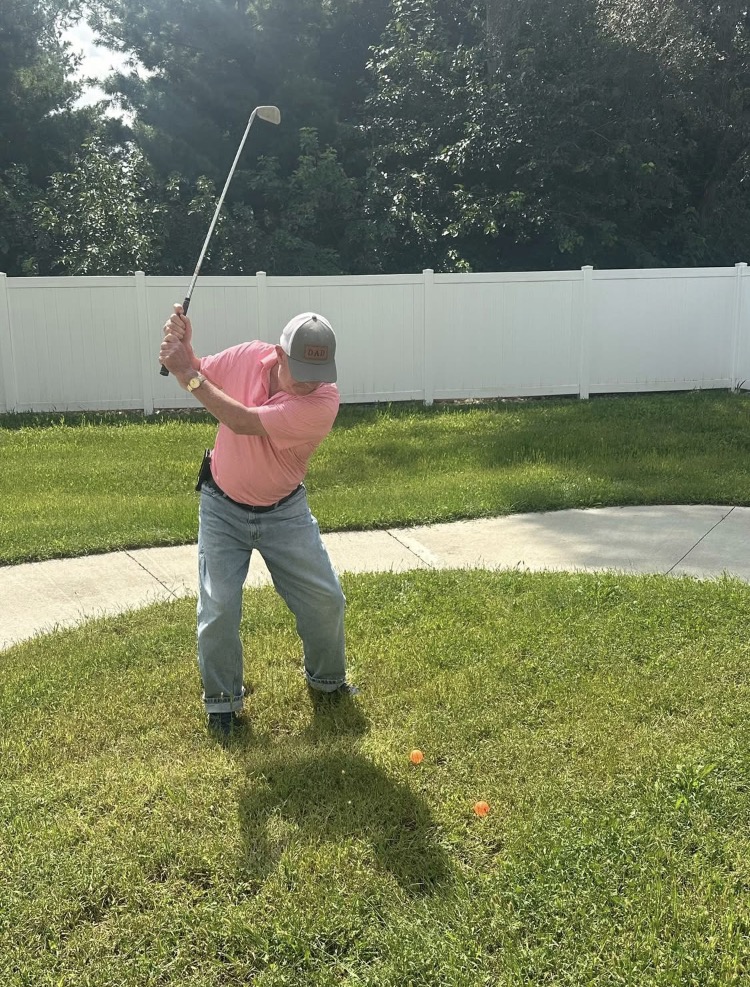
As part of the training, Sydney created a golf-themed sensory kit inspired by residents who spent years golfing and participating in country club life.
“I wanted to honor this passion and be able to share it with them,” Sydney says.
The sensory kit included:
- Assorted golf balls and tees for sorting and tactile engagement
- Foam balls and a putting mat for safe physical activity
- Turf and a sandbox for sensory stimulation
- Books, coloring sheets and word games
- Visors for personalization
- Fresh grass essential oil for scent-based memory cues
These sensory activities help stimulate memory, support emotional connection and create familiar, comforting experiences.
Why Families Value Memory Care Training
Sydney says families respond positively when they see staff investing in dementia care training.
“Residents’ family members are always happy when staff is learning better ways to care for their loved ones,” she says.
This ongoing education helps build trust and reassures families that their loved ones are receiving thoughtful, informed care.
Supporting Staff in Senior Living Communities
The training also had a meaningful impact on staff.
“Just being around like-minded people who are doing what you do each day is helpful,” Sydney says. “The supportive environment of learning, ‘Oh, so I am not the only one who experiences that or struggles with that,’ is what was so helpful to me.”
Peer connection helps reduce burnout and decision fatigue — common challenges in memory care — and strengthens team collaboration.
Conclusion: Better Training Leads to Better Memory Care
Memory care programming at Meadowview of Johnston continues to evolve through ongoing training and hands-on experience. By focusing on person-centered activities, sensory engagement and a deeper understanding of Alzheimer’s, staff create daily opportunities for residents to feel connected and purposeful.
For families exploring memory care, it’s important to look for communities that prioritize staff training and individualized programming.
To learn more about memory care at Meadowview of Johnston or to see these programs in action, schedule a visit or connect with the team today.